In this field guide
A seal initiation temperature is only useful for comparison when the strength threshold and sealing conditions are stated. Ask how the supplier made and assessed the seal before treating a lower number as evidence that a film will run better on your food-packaging line.
This article addresses the material evidence in a design review. It does not give a machine temperature setting or establish food-contact suitability.
Ask what “initiation” means in the report
Seal initiation temperature can be defined by a specified seal-strength endpoint. In its packaging guide, section 5.3, TOPAS defines the value for its 9506 example using an 8.8 N strength endpoint. That endpoint belongs to the supplier’s example; it is not a universal acceptance threshold.
A documented method also needs the seal-forming and assessment conditions. Sumitomo Chemical’s published patent application, paragraph 0088, defines its initiation value using a stated peel-force endpoint, sealing load and dwell, conditioning period, pull speed and peel angle. This is that application’s method, not a required procedure for every film. Confirm the threshold, units and full procedure used in each report before comparing values.
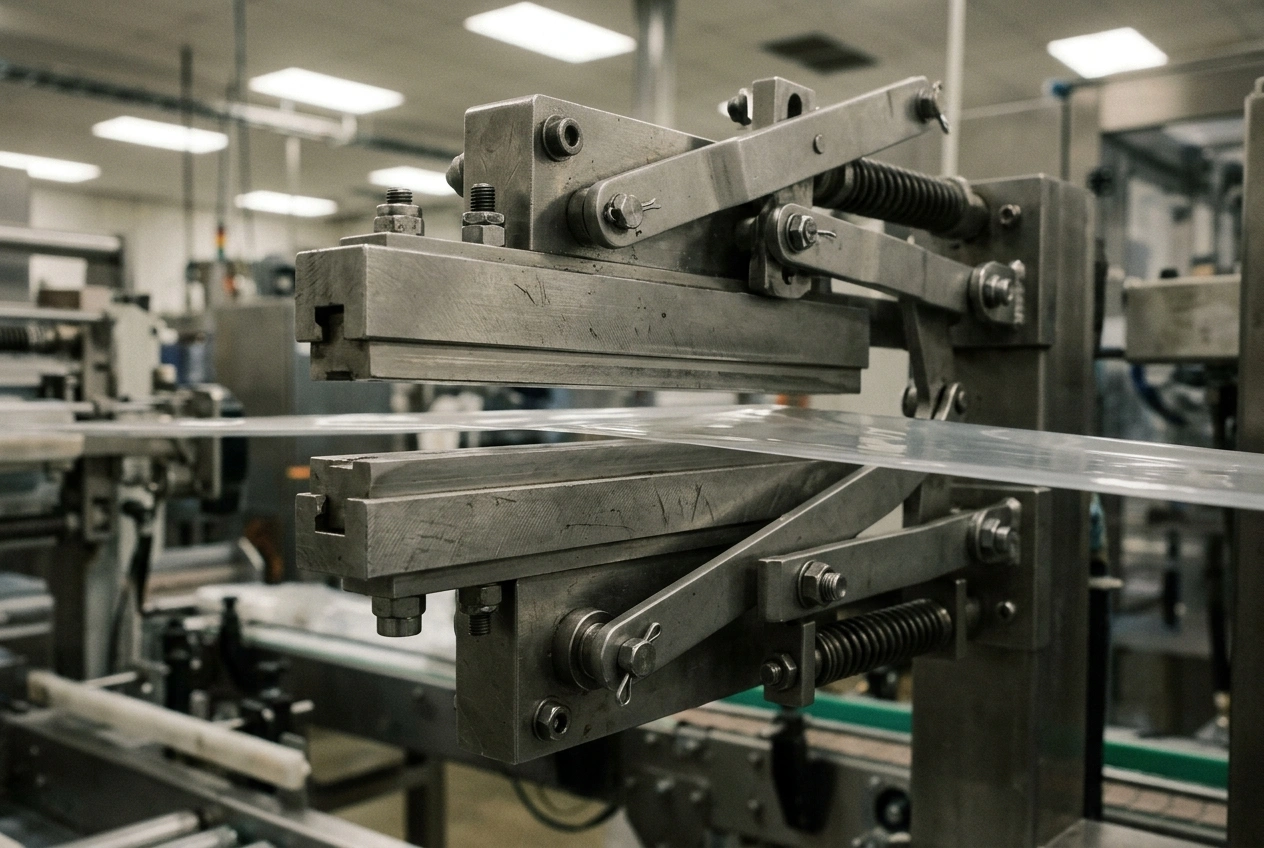
The open-jaw scene identifies where heat and contact are applied. It provides no measurement of jaw temperature, interface temperature or seal performance.
Labthink’s technical guide identifies temperature, time and pressure as seal-forming parameters and distinguishes hot tack from strength measured after cooling. Those distinctions explain why a single headline temperature is insufficient.
| Report item | Information to request | Why comparison needs it |
|---|---|---|
| Sample | Film construction, sealant face and lot | Different surfaces may form different joints |
| Seal formation | Temperature, dwell, pressure and jaw configuration | The thermal/contact history must be comparable |
| Definition | Initiation threshold and units | Values must describe the same endpoint |
| Strength assessment | Cooling delay, specimen and pull procedure | Hot and cooled seals answer different questions |
| Results | Individual results, variability and failure description | A single selected number hides behaviour |
| Intended use | Product, package and downstream conditions | A laboratory coupon is only part of the package |
Separate hot tack from cooled strength
A fresh seal may face load before it has cooled. A cooled specimen can therefore give a different answer from a hot-tack assessment. Ask which state matters at the point where the line first loads or handles the seal, and request the relevant evidence rather than assuming one result covers both.
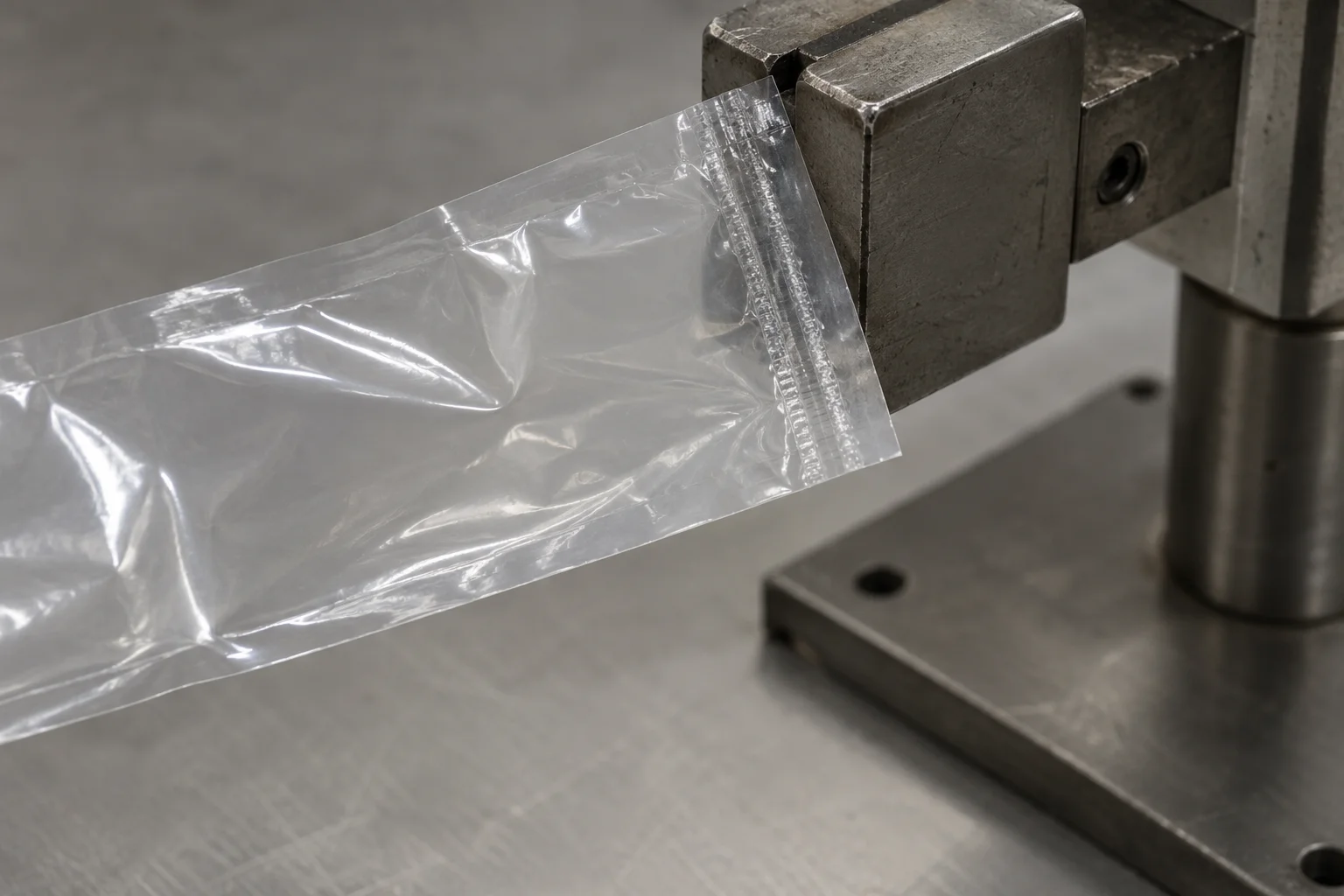
The film-strip scene shows a physical seal edge and a grip. It is an illustrative object, not a documented specimen or measured peel test. A real report must identify the sample and procedure that generated its result.
RDM’s sealing discussion likewise separates controlled laboratory seal formation, strength assessment and finished-package checks. We use that distinction here without adopting the article’s example numbers or treating its method references as a compliance certificate.
Keep the joint and the package separate
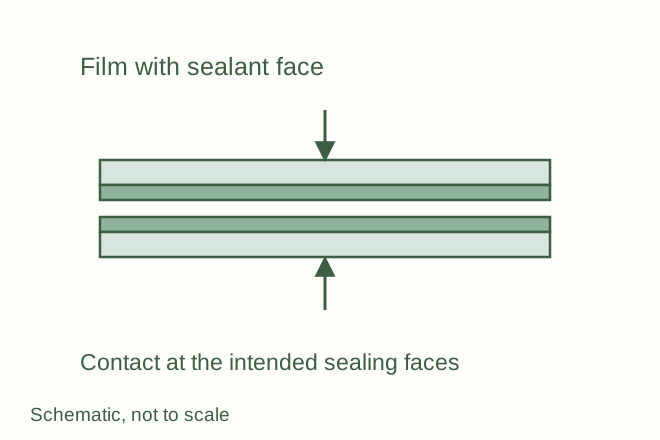
The cross-section shows two sealant faces brought together. It is a simplified physical relationship, not a material recipe or a claim that every laminate has the same layer structure.
A seal-strength value alone cannot identify every channel, fold or contamination-related failure in a complete pack. Ask the responsible packaging team which integrity assessment fits the product and package, and how samples will represent the actual closing operation. Keep the result of that assessment beside the material report.
Compare films on matched evidence
First, place the two reports side by side and mark differences in sample construction, seal formation and evaluation. If those differences prevent a fair comparison, ask for a matched test or limit the conclusion to what each report actually establishes.
Next, agree a line trial using production-intended material. Record the machine configuration, operating conditions, product contamination concerns and the state of the pack after its relevant handling. The jaw setting is an input to that trial, not a direct substitute for the supplier’s laboratory temperature result.
File a material decision
Record the accepted material reference, the tests relied upon and their conditions. Identify any unresolved food-contact, barrier or shelf-life question separately; none follows automatically from seal initiation or a visually sound seam.
Use the packaging materials guide to keep this evidence with the other material decisions. The automation handoff checklist identifies who should own the trial and the final release record.