
In this field guide
An automation handoff fails when the integrator receives a convincing package image but cannot identify the material, dimensions or sample revision behind it. Send one controlled record linking the package drawing, physical samples and intended machine conditions, with an owner for each unresolved item.
The checklist here is an editorial review aid. It does not replace an integrator’s design requirements or a validated acceptance protocol.
Identify the pack at the machine boundary
Describe what enters the machine and what leaves it. A flat carton, pre-glued sleeve and erected carton are different incoming parts. For a container, state the filled condition and any closure or decoration already present. Show the intended orientation at the point of handover.

The generic carton scene illustrates the outer geometry presented to guides. A production review must also cover the incoming form and opening process, which are not visible in that closed pack.
Krones’ design process includes engineering, physical samples and checks against existing line equipment. For your own project, ask the integrator which source files and samples are necessary to make that assessment meaningful.
Use a handoff record with owners
| Record section | Required input | Owner to agree |
|---|---|---|
| Package identity | Component references, revisions and units | Packaging project owner |
| Geometry | Controlled drawing, orientation and handling references | Structural designer and integrator |
| Material | Actual grade or construction, coating and variability information | Converter or component supplier |
| Product | Representative product condition and fill requirement | Product and production teams |
| Operating context | Relevant motion, stop/start and changeover conditions | Production and integrator |
| Samples | Quantity, origin, limitations and matching revision | Sample producer and trial owner |
| Acceptance | Criteria source, method, evidence and release authority | Responsible quality and engineering teams |
Mark physical references on the drawing
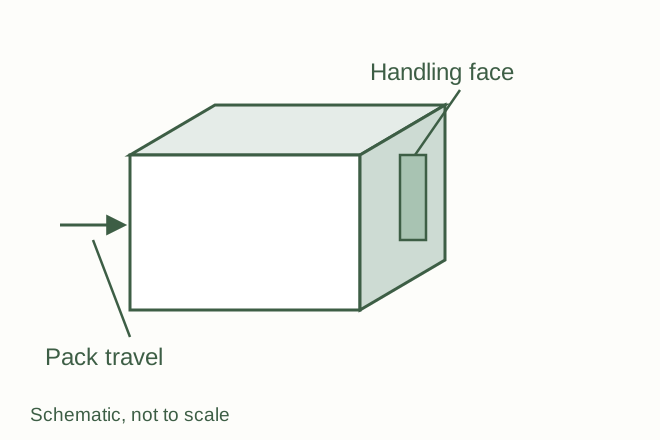
The arrow shows the closed pack’s direction of travel into a station; the marked face identifies a separate handling reference. Confirm that presentation direction and the actual surfaces the machine uses. Describe carton erection and product loading on their own drawings.
Mark protected decoration areas and proposed code zones too. If the machine needs to touch one of those surfaces, resolve the conflict before calling the artwork final. Record an unknown interface as an open action with a due point in the project, rather than leaving a blank that looks like approval.
Bring samples that represent production
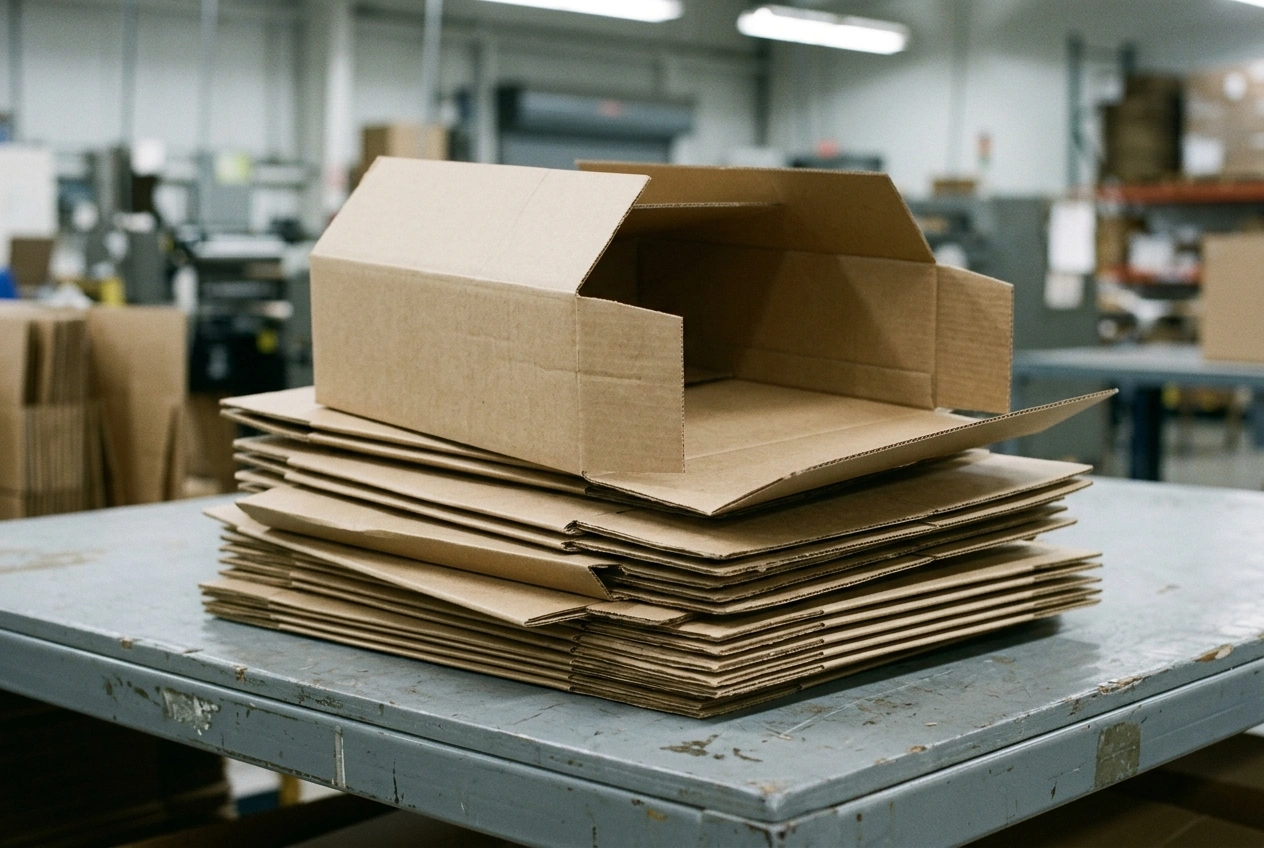
A collection of carton mock-ups can answer early geometry questions. Before a machine trial, identify which samples represent the intended converted material and which are exploratory. Do not combine them in an unlabelled trial batch.
BOBST’s converting discussion explains that grain direction, temperature and humidity affect board behaviour. Record material and conditioning differences when comparing a new carton with a previous sample. The dimensions alone may not describe the change that affects feeding or opening.
Agree on the trial sequence
Ask the integrator and production team to identify the conditions that could expose an interface problem. Include the required package variants and the relevant stop/start or changeover events. Define the sample record and acceptance basis before starting; this article supplies no generic trial duration or pass rate.
For each observation, retain the sample identifier, machine configuration and actual condition. Write down what happened: a flap did not open, the product caught an edge or a closure remained incomplete. A proposed cause should be identified as a hypothesis until the team has evidence to support it.
Close the handoff with a revision decision
The release record should name the approved pack revision, the assessed machine arrangement and the evidence used. List open actions, responsible parties and any operating restrictions. A later material or geometry change needs a decision about whether the previous evidence still represents it.
The design-cost worksheet helps put this work into scope before commissioning it. Use the design for automation guide to connect that scope with the resulting handoff record.