
In this field guide
A packaging design budget can omit the work needed to make the approved concept run on a line. Define the deliverables, sample stages and trial responsibilities before comparing fees, then keep unresolved production work visible as a separate allowance.
For a European project using several suppliers, state the currency, tax basis, trial location and which organisation owns each item. This guide supplies a scope worksheet, not a market price list.
Define what the fee buys
Separate visual development from structural engineering, material assessment and line validation. A rendered concept, a dimensioned production drawing and a trial report are different deliverables. Name the files and physical samples that constitute completion at each stage.
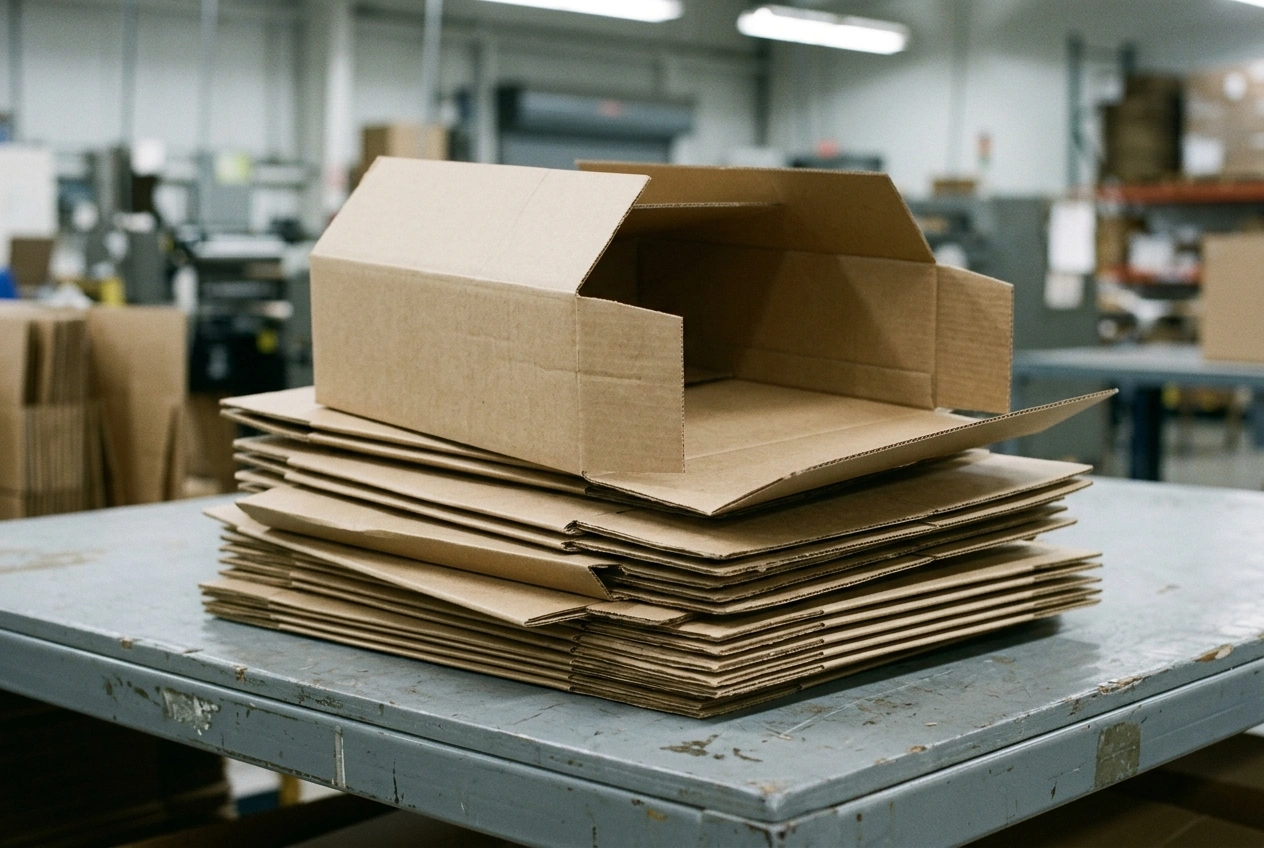
Krones’ design-process description separates project definition, concept, engineering, pilot work and tests. It is a manufacturer’s workflow example, rather than a universal agency service package. Use it to identify questions for your own scope, without assuming every provider includes those stages.
| Work item | Deliverable to define | Cost boundary to clarify |
|---|---|---|
| Requirements | Written product, pack and process brief | Who gathers missing production inputs? |
| Visual design | Artwork variants and agreed review format | Which revisions and variants are included? |
| Structural work | Controlled drawings and material references | Who owns editable production files? |
| Samples | Specified prototypes or production-intended parts | Who pays for tooling, conversion and delivery? |
| Line assessment | Defined trial and recorded observations | Who supplies machine time, personnel and product? |
| Revision and release | Updated files and approved sample reference | What happens after a failed trial? |
Complete the project scope worksheet
Download the blank scope worksheet (CSV) and open it in a spreadsheet, or copy the record below. Keep the existing guidance table beside it when agreeing the entries. The CSV has a separate row for each work item, with blank fields for the decision and its owner.
| Field | Agreed project entry |
|---|---|
| Project / package reference | ____________________ |
| Work item | ____________________ |
| Agreed deliverable and revision | ____________________ |
| Responsible owner | ____________________ |
| Included work | ____________________ |
| Excluded work | ____________________ |
| Quotation / proposal reference | ____________________ |
| Currency and tax basis | ____________________ |
| Agreed amount | ____________________ |
| Open action and action owner | ____________________ |
| Evidence required for release | ____________________ |
Repeat the work-item record for requirements, visual design, structural work, samples, line assessment and revision/release. Enter an amount only from an actual proposal on its stated currency and tax basis. Keep an unpriced item visible as an open action when comparing totals.
Example of a completed record
This fictional sample-scope entry demonstrates how to fill the worksheet. It describes no supplier offer or completed project and assumes no price. The completed example CSV uses the same columns as the blank file.
| Field | Example entry |
|---|---|
| Work item / revision | Samples for DEMO-CARTON-r1; converter-made lot agreed with the integrator |
| Owner | Packaging project owner, an example role |
| Included | Produce the agreed material and structure; identify samples to the drawing revision |
| Excluded | Production line time, shelf-life testing and appearance approval |
| Quotation / amount | Not quoted; request an itemised proposal; no amount assumed |
| Currency and tax basis | To be stated in the actual proposal |
| Open action / owner | Line trial owner to confirm quantity and acceptable sample-manufacturing route |
| Release evidence | Pending: controlled drawing, matched sample IDs and trial observations |
The exclusions identify work that still needs an owner or separate scope. The open action prevents an unconfirmed sample quantity from becoming an assumed deliverable.
Budget for a sample that answers the question
An appearance mock-up may be sufficient for a graphic review. A line trial may require the intended material, fold or joint, tooling process and filled state. Ask the trial owner which sample limitations would make its result unusable before paying for a prototype set.
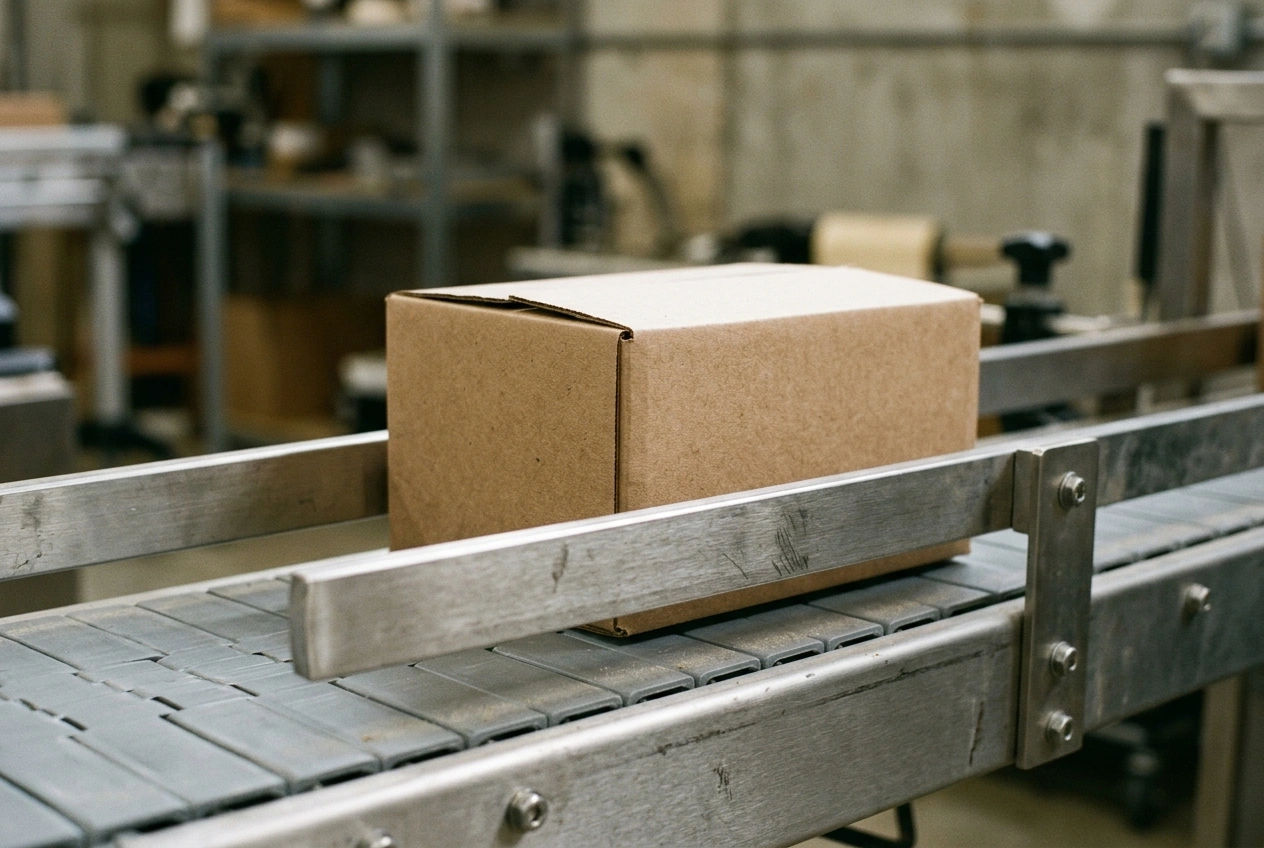
The carton between guide rails illustrates a handling interface that a visual presentation cannot assess. It does not document a trial or establish a compatible pack size. Link the relevant machine configuration to the actual samples in the project record.
Name the drawing references
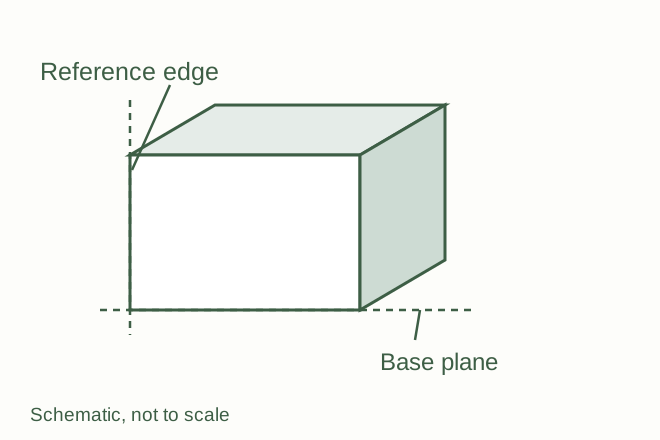
The schematic shows reference features on a carton. Those features need a controlled relationship to the production drawing; the diagram supplies no tolerances. If the structural file changes, the project owner should identify which artwork, samples and trial documents need renewal.
BOBST’s carton converting guide describes cutting, creasing, folding and gluing, with material variables including grain and moisture. This is why “same outer dimensions” can be an incomplete basis for deciding that a new sample is equivalent to the old one.
Make trial costs legible
List the machine time and the people needed to run and evaluate the trial. State who supplies product, consumables and sample transport, and who handles any scrap. Keep a contingency for further work tied to a specific unresolved question, rather than an unexplained percentage.
An editorial budgeting relationship is: approved design work plus sample/tooling work plus trial resources plus agreed revision work equals the scoped project total. Populate each term from the actual providers and project records. Do not infer a local rate from a generic online package-design price.
Compare proposals on the same tax and currency basis and record exclusions beside the total. If one includes production-intended samples and another includes a visual mock-up, their headline fees describe different work.
Define who can release the result
Before the project begins, identify who approves appearance, who controls the material and structure, and who accepts the pack for the specified line. A designer can deliver the agreed files while an unresolved machine issue remains with another party. The budget should show that boundary explicitly.
Use the automation handoff checklist to define the release record. The design for automation category connects this budget worksheet with the technical information that must accompany it.