
In this field guide
A carton within a machine’s nominal size range can still be difficult to open or load. Before freezing the design, review the supplied carton form, fold behaviour and product-entry direction against the actual cartoning sequence.
This guide helps a design team prepare that review. It does not classify a particular carton as compatible with a machine model.
State the incoming form
Tell the integrator whether the line receives a flat blank, pre-glued sleeve or erected carton. Supply the controlled drawing and a representative sample. The final closed shape alone does not show how the machine must pick up and open it.
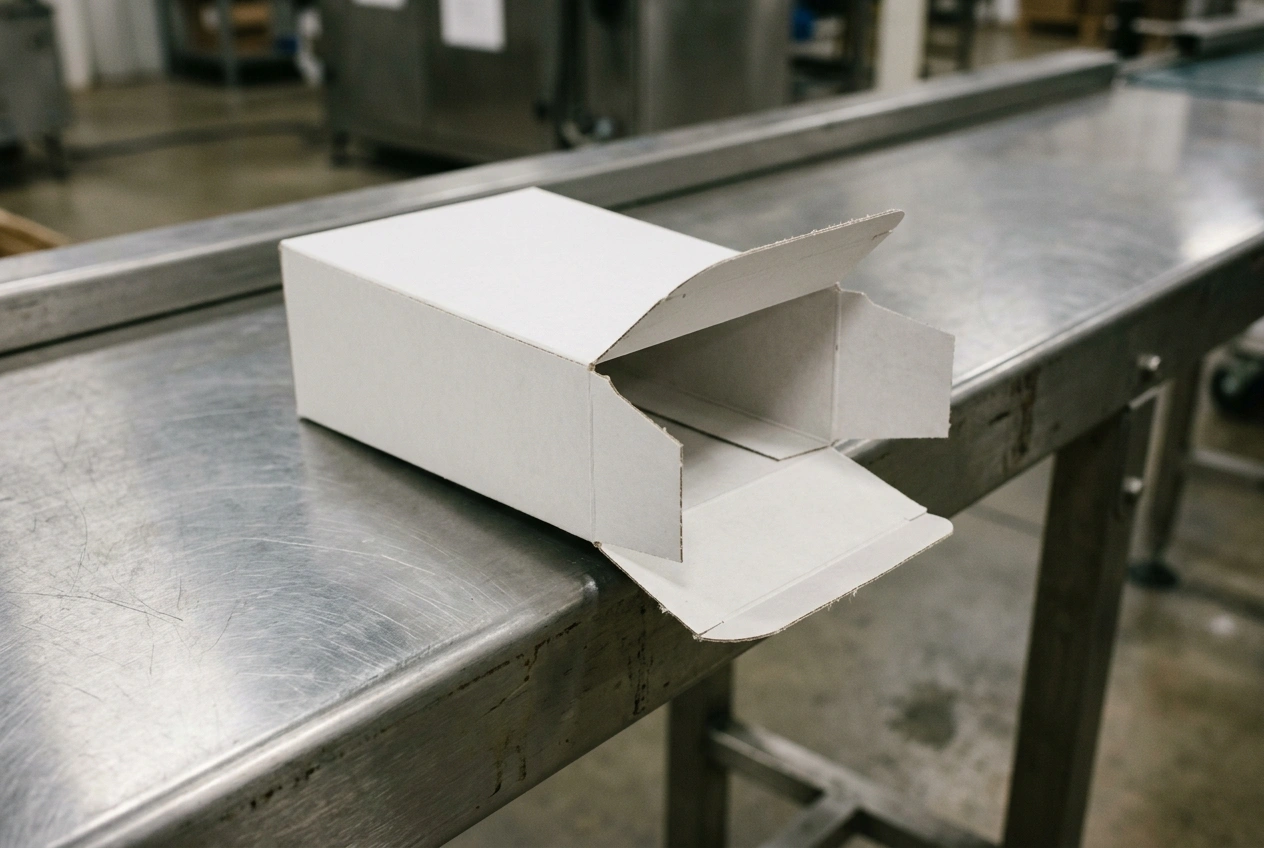
The open carton illustrates accessible flaps and a product-entry face. It is a generic structure and should not be used as a reference drawing for a production style.
BOBST’s converting guide describes feeding, pre-breaking, folding, gluing, transfer and delivery as converting stages. A packing team needs to know which operations have already occurred before the carton reaches its own machine.
Agree the loading direction
Show the intended product-entry face and orientation on the drawing. Identify the product’s relevant leading edge, any projecting features and the closure that follows loading. Ask the integrator to explain how its actual setup holds the carton while the product enters.
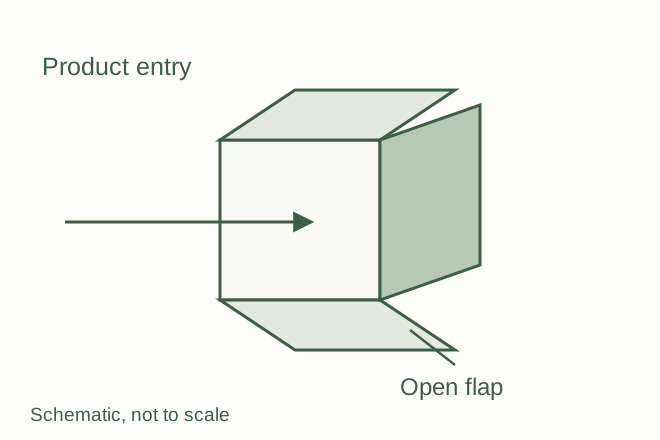
The schematic marks an entry direction through an open carton end. It does not prescribe horizontal loading for every package. A different machine or product may require another orientation and another structure.
| Feature to review | Evidence to bring | Trial question |
|---|---|---|
| Incoming format | Converter drawing and supplied sample | Can the machine pick and present it as intended? |
| Opening and folds | Production-intended crease and glue condition | Does it open without an unintended fold or panel restraint? |
| Loading face | Product and carton orientation drawing | Does the product enter without catching or damage? |
| Closure features | Tucks, flaps or specified glue faces | Can the configured closing operation complete them? |
| Decoration and code | Approved artwork and protected areas | Do handling and closure obscure or mark them? |
| Material variation | Supplier tolerances and conditioning record | Do tested samples represent the intended supply? |
Examine the board and crease together
BOBST discusses grain direction and environmental moisture as influences on board behaviour. Bring the actual material specification, rather than describing the sample as “cardboard.” A substitute board or a hand-adjusted crease may explain a useful prototype result while leaving production behaviour unresolved.
Agree which variation the trial needs to represent. Record the sample origin, drawing revision and storage history where relevant. If the converter changes a glue joint or pre-breaking operation after the first trial, identify that as a structural-process change in the next sample record.
Observe the closed carton too

Guide rails show one possible contact with the completed outer shape. The illustration does not demonstrate opening or product insertion. During the real trial, check the pack through the whole intended sequence and preserve the configuration used.
When a failure occurs, name the stage and observed feature. “Tuck caught on product at entry” gives the team a starting point that “carton incompatible” does not. Photograph the actual sample and link it to the event record, keeping proposed causes separate from observations.
Plan the revision loop
Agree who owns a structural change and how revised samples will be identified. Keep the previous version available for comparison. Where practical, isolate the feature under investigation rather than changing material, structure and machine settings at the same time.
The final acceptance record should identify the approved carton, product and machine arrangement, with the limits of the trial. An approved drawing is one part of that record; the trial establishes what happened with its representative samples.
Use the packaging machinery compatibility guide to prepare the next review. The automation handoff checklist keeps the drawing, material and sample evidence connected to a release owner.